
 Paul
Paul
Podcast: Play in new window | Download ()
Subscribe: RSS
Laying Down the Law embarks on perhaps a quizzical look at our Serjeant at Law, who has risen to the heights of his profession, being, as there were in those days, only twenty of his rank, selected by special writ from the king. Safe to say, he had a finely oiled machine working in his favour, giving him a life of luxury and entitlement. Life was good for men of the law in Chaucer’s day, there of course being no women in that line of work.
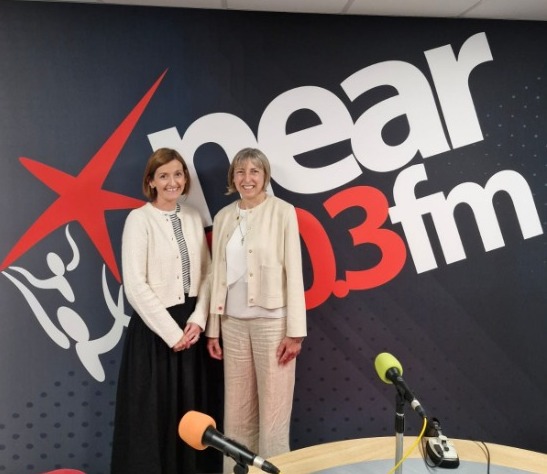
Professor Oonagh Breen, of the Sutherland School of Law, UCD, and her colleague Dr Niamh Howlin will talk about their work and their research and their career journeys. We will hear Oonagh and Niamh talk about their career journeys and surmise how things have changed since Chaucer’s wholly male, well got and, dare I say, smug Sergeant at Law, made his way to Canterbury, dressed in his “robes of authority” and fuelled by an abundance of self-belief.
Written and produced by Bernie Dwan. Recorded and mixed by Declan McGlade. The series is made with the support of Coimisiún Na Meán’s Sound and Vision scheme, with the Television License fee. Recorded in Near FM studios, Coolock.
About the series
Devised and produced by Berni Dwan, and funded by Coimisiún na Meán, Charmers and Chancers: Chaucer’s Cheerleaders, is a five-part series that attempts to link five key medieval professions – military, religious, legal, medical, trading – as depicted in Chaucer’s Canterbury Tales, to women’s working lives today, and examine women’s participation in these professions down through the centuries. In the Canterbury Tales, written by Geoffrey Chaucer between 1387 and 1400, we meet thirty characters – only two of whom are women – The Prioress and the Wife of Bath – who agree to take part in a story-telling competition before setting off on pilgrimage to Canterbury Cathedral to visit the shrine of Saint Thomas Beckett, that troublesome priest who was murdered there by King Henry IIs knights in 1170.
In an innovative and entertaining way, the series will – at a time when the gender pay gap is still a reality and childcare remains a challenge for many women who work outside the home – juxtapose aspects of these five occupational areas between late medieval and post-modern by engaging 21st century female practitioners in discussion.