
 Paul
Paul
Podcast: Play in new window | Download ()
Subscribe: RSS
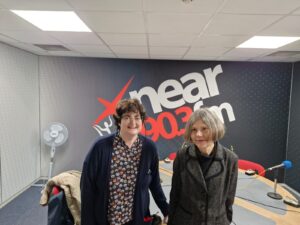
Cloistered Warriors embarks on a religious journey throughout the centuries, starting with perhaps, one of the most irritating of all Chaucer’s characters, what with her life of luxury and entitlement, her childish acceptance of religious doctrine at its most basic level, and her downright unsettling tale. No Hildegard of Bingen or Julian of Norwich, the Prioress’s acceptance of the tenets of Catholicism puts one in mind of generations of Irish people who were cowed and bowed by the princes of the church, although in fairness, this lady on her high horse is not for bowing, and in a man’s world, who could blame her. Dr Bridget Nichols from the Church of Ireland Theological Institute and Dr Melanie Brown from The Royal Irish Academy of Music talk about their research and their work and surmise how things have evolved since Chaucer’s smugly sanctified, well-fed and well-dressed Madame Eglantine made her way to Canterbury.
Written and produced by Bernie Dwan. Recorded and mixed by Declan McGlade. The series is made with the support of Coimisiún Na Meán’s Sound and Vision scheme, with the Television License fee. Recorded in Near FM studios, Coolock.
About the series
Devised and produced by Berni Dwan, and funded by Coimisiún na Meán, Charmers and Chancers: Chaucer’s Cheerleaders, is a five-part series that attempts to link five key medieval professions – military, religious, legal, medical, trading – as depicted in Chaucer’s Canterbury Tales, to women’s working lives today, and examine women’s participation in these professions down through the centuries. In the Canterbury Tales, written by Geoffrey Chaucer between 1387 and 1400, we meet thirty characters – only two of whom are women – The Prioress and the Wife of Bath – who agree to take part in a story-telling competition before setting off on pilgrimage to Canterbury Cathedral to visit the shrine of Saint Thomas Beckett, that troublesome priest who was murdered there by King Henry IIs knights in 1170.
In an innovative and entertaining way, the series will – at a time when the gender pay gap is still a reality and childcare remains a challenge for many women who work outside the home – juxtapose aspects of these five occupational areas between late medieval and post-modern by engaging 21st century female practitioners in discussion.